"A Mother from Bethlehem"
"What does it mean to have hope?"
8/5/20253 min read
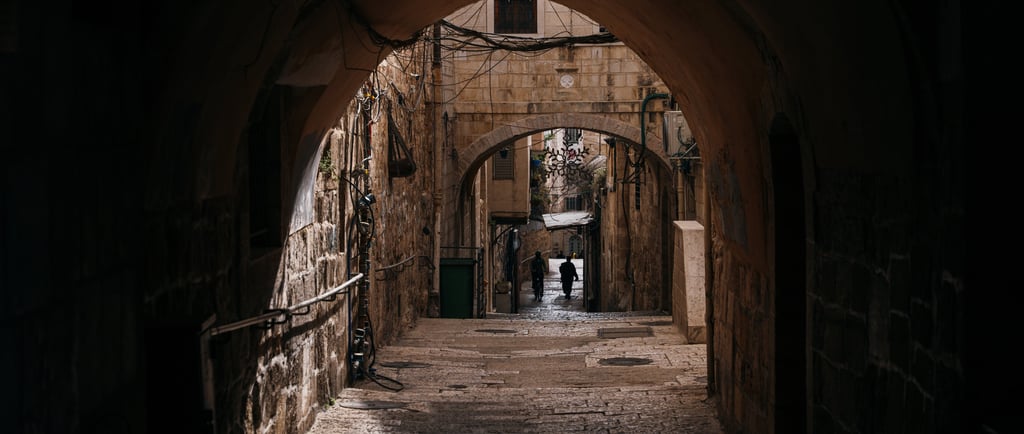
Bethlehem - April 2025
"Abf Voice Of" is a project that changed my life, and the lives of so many others.
I had the chance to spend time with some of the locals and gather their stories through a few short interviews. In front of the camera stands a mother of three—a psychologist with her feet firmly on the ground.
In her hands lies the emotional and psychological weight of the choir children when we are not around.
Black hair, deep eyes. Pride and courage shine through her words, but I can read something else in her gaze.
She is a 40-year-old woman in a country at war; it is hard to hide what you carry inside.
We begin the interview with the usual small talk to break the ice. She tells us how happy she is to be part of the project, speaking of hope, goals, and so on. I listen in silence. As the story unfolds, my focus gradually shifts from the camera shot to a fundamental concept—a key that opens a massive, well-worn, yet long-forgotten door. This door is called HOPE.
I gather my courage and, trying to be direct but careful not to be misunderstood, I find a way to string a few simple words together to ask my question:
What does it mean to have hope in your heart?
What does it mean to be a mother of three beautiful children and still have hope in a situation like Palestine?
She smiles at me at first, understands the question, and grows serious...
Maybe I went too far. I wanted to dig deep... maybe that door shouldn't have been opened.
But I am curious. What kind of courage do these people have? True, we are not in Gaza, but the situation is by no means easy here either.
I reflect on how back in Italy we so often worry about things like: "I don't earn enough to have kids," "I don't own a house," "I'm not doing my dream job," and things like that.
I wait anxiously. She takes a breath and begins to speak.
"At first, everything terrified us. We felt the violence among our people, and we were afraid. We feared losing our home, our job, our lives. We were terrified. Then came peace, hope, rebirth—but then war, death, destruction, and pain returned. But today... today I am no longer afraid of all that. My greatest fear now is no longer feeling these emotions deep in my heart. There is no more room for tears of sadness. Where bombs have dug deep into my soul, a void has been left that no longer allows me to feel. We are indifferent, resigned, disappointed. But do you want to know what scares me the most? Not being able to understand or know what I need to do for my children. I love this land, I love my life, I love the people here. Should I stay? Should I remain? What should I do? At first, I talked to everyone about this, I wanted the world to know. Now, I have shut myself in silence."
I am left speechless. So what now? How can she speak of Hope where it doesn't exist? In that moment, I realize that I will probably never truly understand what it feels like to experience those emotions. In a few days, I will return to Italy, but they... they will stay here, day by day, hour by hour, bomb after bomb.
The woman looks up and, smiling, says: "That is why projects like this matter. You are here with us, bringing us hope, change, life. You work with our children, you see them grow, you give us a reason to keep going. You might not understand how hard it is to be here, but you will never know how much hope you give us by not leaving us alone.
You are our voice out there, the light for us and for our children."